Surf spot guide · Namotu, Fiji
A shallow, hollow left over sharp coral, reached only by boat, that fires fast barrels when a SW swell meets a high tide and the SE wind blows offshore.
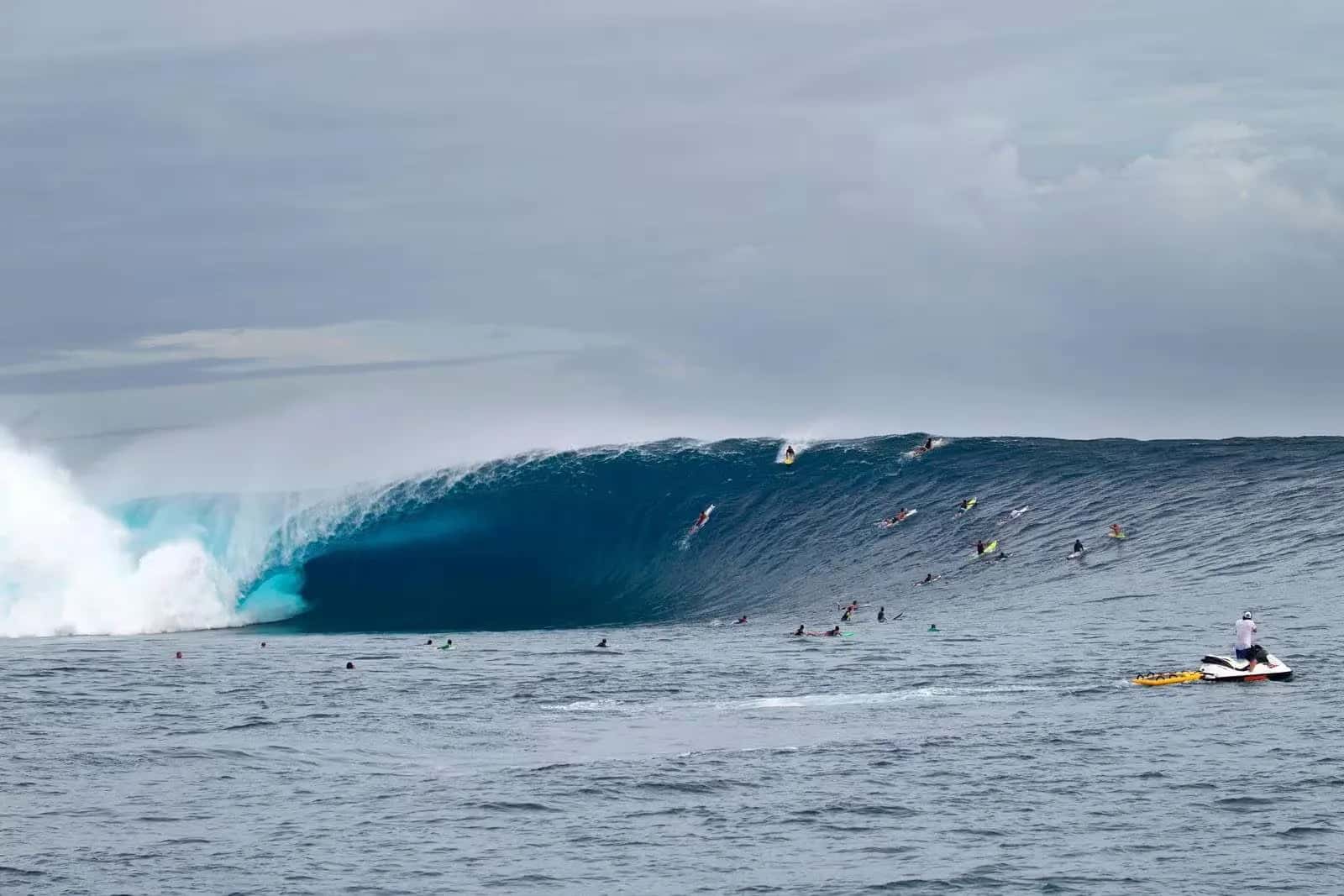
Mini Cloudbreak is a left-hand reef break out across the Navula Passage, roughly 3 km offshore. It never gets anywhere near the size of Cloudbreak, yet it packs the same power and throws just as hollow and mean. Expect quick, punchy barrels that can peel for hundreds of metres on the right day. The SE wind that spoils the right by the Lighthouse blows offshore here, and in Fiji that wind is in for around 70% of the year. A SW swell suits it best, though anything from S round to W can work, in a range of roughly 0.9 to 2.4 m. It needs some size before it wakes up, and April through October is the season to aim for. Aim to paddle out on the rising or high tide, when there is enough water over the shallow, razor-sharp coral. Low tide on this reef is genuinely dangerous. A right also breaks over submerged reef here. This is a wave for advanced surfers only. Crowds are rarely a problem, and plenty of visitors stay out in the channel and watch rather than paddle in. The mood in the lineup comes down to whoever shares your boat out.
Smaller than Cloudbreak, but every bit as powerful, hollow and mean.
You’re seeing the next 3 days. A free account opens all 14, which is the difference between checking tomorrow and planning a trip.
Namotu
Cloudbreak is a world-class left reef pass off Namotu in Fiji, breaking in separate sections from a big outside peak down to a razor-shallow inside, and it is strictly for advanced surfers.
Namotu
A fast, hollow left over shallow coral just off Tavarua, peeling in sight of the resort's diners, running a little smaller than Cloudbreak and strictly for experts.
Namotu
A long, top-quality reef left off Namotu that gives intermediates and longboarders a friendly wall on small swells, then throws heavy, hollow barrels once it gets big.
+8 MORE →It rarely gets busy out here, and plenty of people sit in the safe water of the channel watching rather than surfing.
Heavy, hollow and shared with your boat crew
If the top of the reef is breaking poorly in the SE wind, paddle further down to where the wave wraps around a bend and the wall keeps running.
Wait for a solid SW swell lined up with a high tide before you book the boat.
HAZARDS · KNOW BEFORE YOU PADDLE
It rarely gets busy out here, and plenty of people sit in the safe water of the channel watching rather than surfing.
Heavy, hollow and shared with your boat crew
The only way out to this reef is by boat. Getting there takes some effort, since the break lies roughly 3 km offshore.
Open in MapsThis spot typically requires a boat.