Surf spot guide · Newquay, United Kingdom
Consistent, powerful Cornish beachbreak that hosts WQS events and fires on W swell with hollow peaks at low tide.
Dangerous Conditions
Dangerous conditions with waves up to 3.3m and energy levels reaching 2196 kJ. Peak conditions around 7:00 PM.
Extremely hazardous surf conditions. Only experienced surfers should consider entering the water. Strong currents, large waves, and powerful energy present. Warning valid until 9:00 PM.
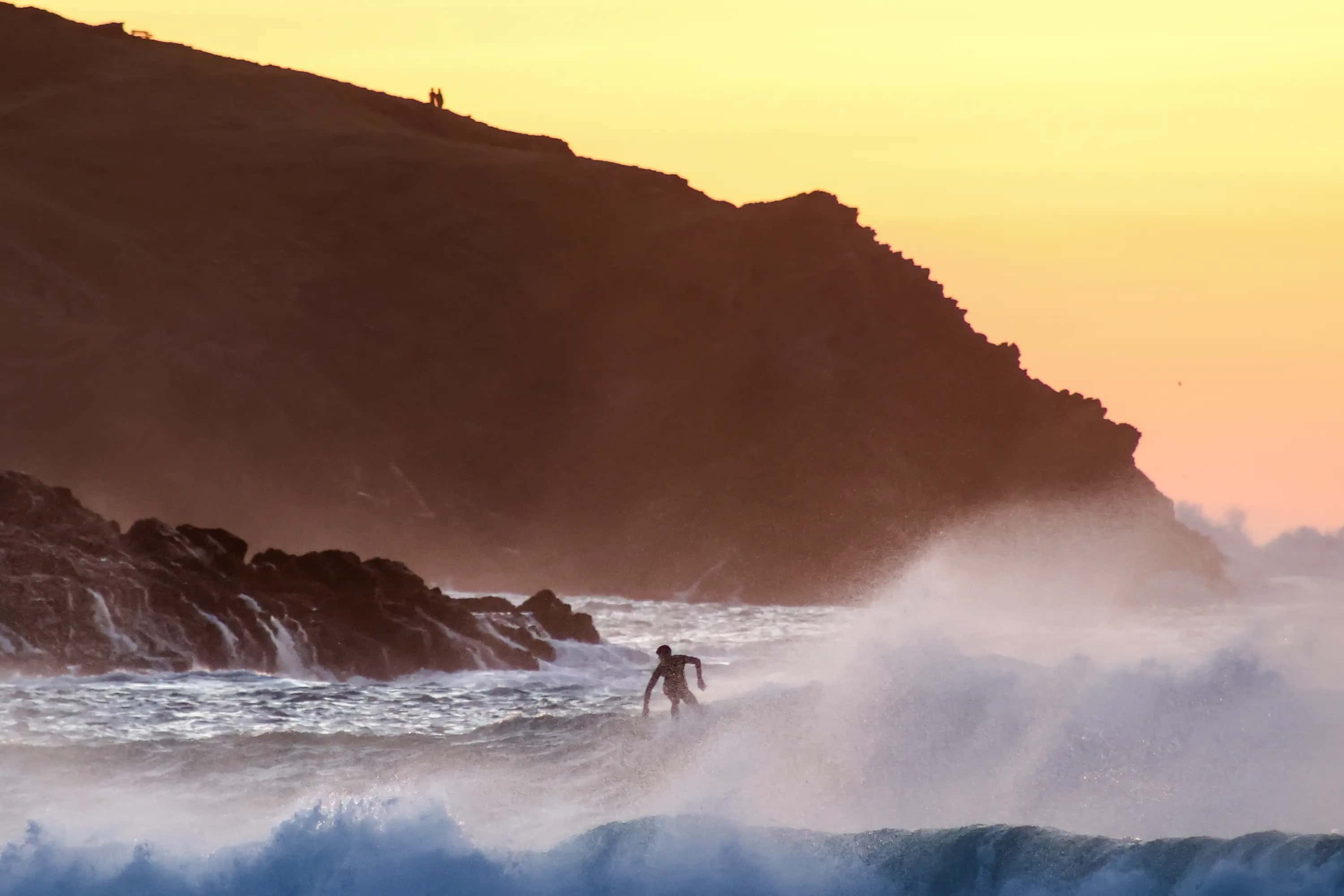
North Fistral is the northern section of Fistral Beach, a wide sandy bay on the Atlantic-facing edge of Newquay. Sand-bottomed peaks break across the full width of the bay, producing mainly rights that steepen and hollow out as the tide drops. At low tide the banks can generate short barrel sections; the incoming tide mellows the shape and reduces intensity. Pure W swell is the ideal fetch, though the spot picks up SW through NW and its exposed position gives it one of the highest swell-catching rates on the English south-west coast. Offshore wind is E to SE. The wave is fast and steep across the full size range, which can stretch from waist-high to well overhead - banks have been observed holding up to around 2.5m faces before the shape deteriorates. North Fistral is the centrepiece of British competitive surfing, hosting WQS rounds and numerous national events annually, cementing its status as the most prominent surf beach in England. Access is direct from the main beach car park and the surf centre that sits above the dunes - no technical entry is required in normal conditions. Crowds are intense throughout the year and overwhelming in summer, with every ability level in the water simultaneously. Beginners use the shallower inside sections on smaller swells, but when the surf builds the lineup becomes assertive and the rips demand real water-reading ability.
Steep right-handers that hollow on the drop, a touch bigger than South Fistral.
You’re seeing the next 3 days. A free account opens all 14, which is the difference between checking tomorrow and planning a trip.
Fistral is the busiest surf beach in England and earns that reputation daily. Summer weekends can put hundreds of surfers in the water simultaneously, and the lineup does not self-organise politely.
England's surf capital
Newquay
Fast, hollow low-tide beachbreak on a compact sandy bay north of Fistral, best on a solid W swell with SE winds.
Newquay
Sheltered sand-bottom beachbreak at Fistral's southern end, producing peaks and a notable left off the rocks.
Newquay
Cornwall's legendary big-wave reef off Towan Head, breaking fast and thick over uneven rock on rare lined-up Atlantic swells.
+9 MORE →W swell rather than SW gives cleaner, less cross-chopped peaks - check swell angle before the drive
Low tide is when the banks produce their best hollow sections; incoming tide softens the wave considerably
Arrive before 8am in summer to find any space in the water or the car park
The rip channels can run hard when overhead - identify them from the dune path before paddling out
Surf schools concentrate toward the south end of the beach on small days; paddle north for more room
Autumn through early winter (September to February) delivers the most consistent quality surf with thinner crowds
HAZARDS · KNOW BEFORE YOU PADDLE
Pay car park above the beach, too small for the volume of visitors. Surf centre, showers, and shop all on site. No technical paddle-out or rock jump required under normal conditions.
Open in Maps